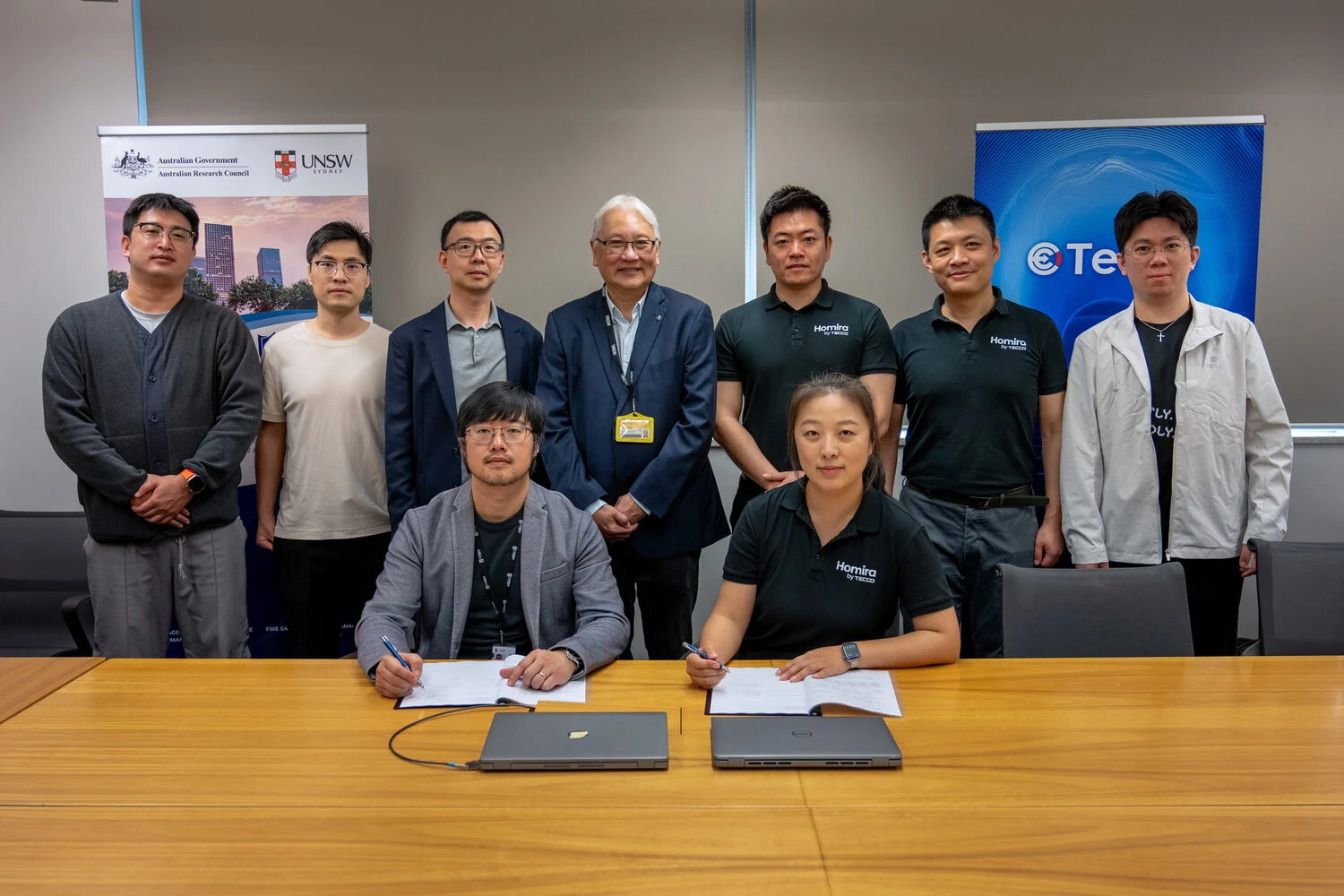
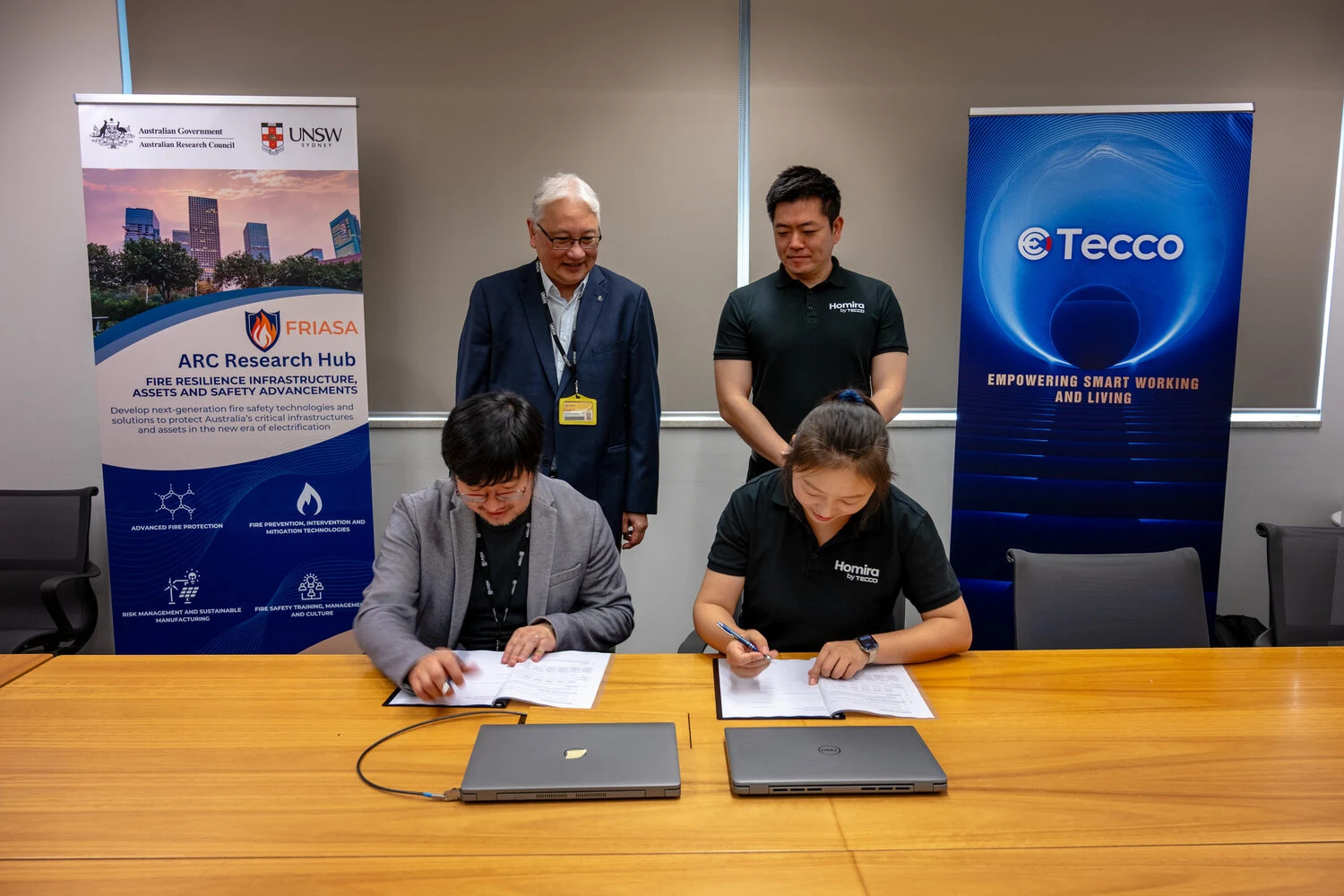
On 2 October 2026, Tecco signed its accession to the ARC Research Hub for Fire Resilience Infrastructure, Assets and Safety Advancements (FRIASA) at UNSW Sydney’s Kensington campus. The partnership brings Tecco’s spatial intelligence and building technology work into a joint research agenda for safer, more resilient and more energy-efficient buildings.
The Hub is part of the Australian Research Council Industrial Transformation Research Hubs programme. The joint project is titled “AI-Enabled Spatial Intelligence for Safe, Resilient and Energy-Efficient Buildings”. Its first research phase is planned to begin in November 2026.
A building model that connects the disciplines
Spatial structure, device observations, environmental conditions and energy assets are often described in separate systems. The research asks what becomes possible when those observations share a structured, dynamic representation of the building they belong to.
Room geometry and spatial relationships provide context. IoT and device data describe changing conditions. Energy and storage information reveal operating constraints. Connecting them is intended to support monitoring, analysis and decision support across the building, rather than treating each signal in isolation.
From an observation to an appropriate response
Planned investigations include anomaly detection, predictive maintenance, risk identification, distributed energy resources and building energy flexibility. The objective is to examine how multi-source evidence can support decisions that remain meaningful in their physical context.
For Tecco, this also sharpens a core engineering boundary: a language model can interpret context and intent, while a physical response must remain bounded by device capability, operating constraints and safety requirements. The research will explore the relationship between AI-derived understanding and deterministic response; it does not establish a safety function or any form of certification.
A programme designed around evaluation
The current research plan spans November 2026 to November 2030, with overlapping phases. It begins by defining use cases, data requirements and evaluation criteria, then develops data foundations and AI methods before investigating selected applications and validating the resulting work.
- Define the questions: building use cases, research protocols and evaluation criteria.
- Build the data foundation: spatial, device, energy and environmental representations.
- Develop and evaluate methods: anomalies, maintenance, energy flexibility and safety-aware decision support.
- Connect selected outputs to applications: evaluate representative residential and commercial settings.
- Validate and translate: refine methods, retain evidence and support knowledge transfer.
The partnership has been signed. The research is at an early stage: the dates and phases describe the current research plan, not completed results or guaranteed delivery milestones. No validated performance or fire-safety certification is announced here.
A shared starting point
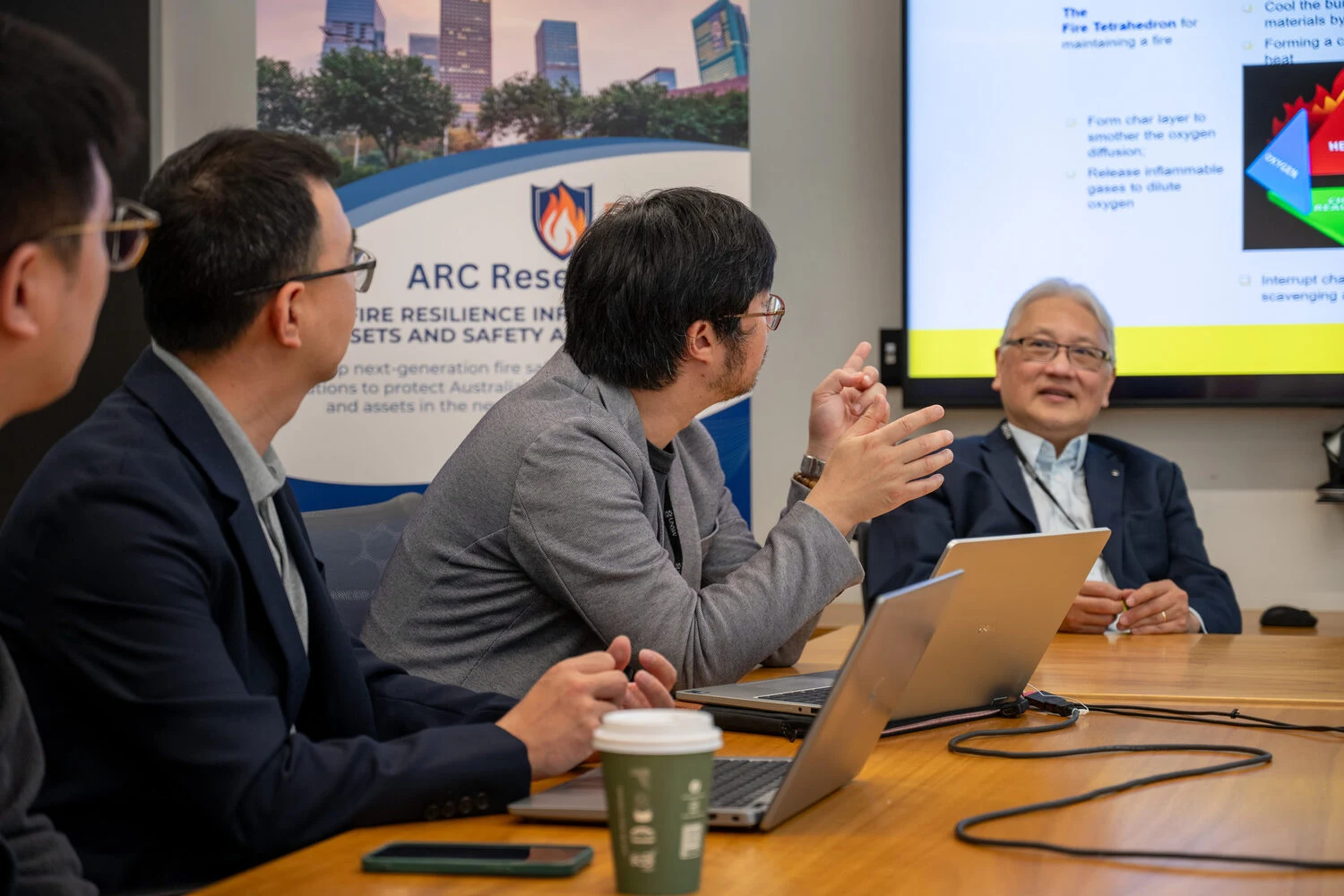
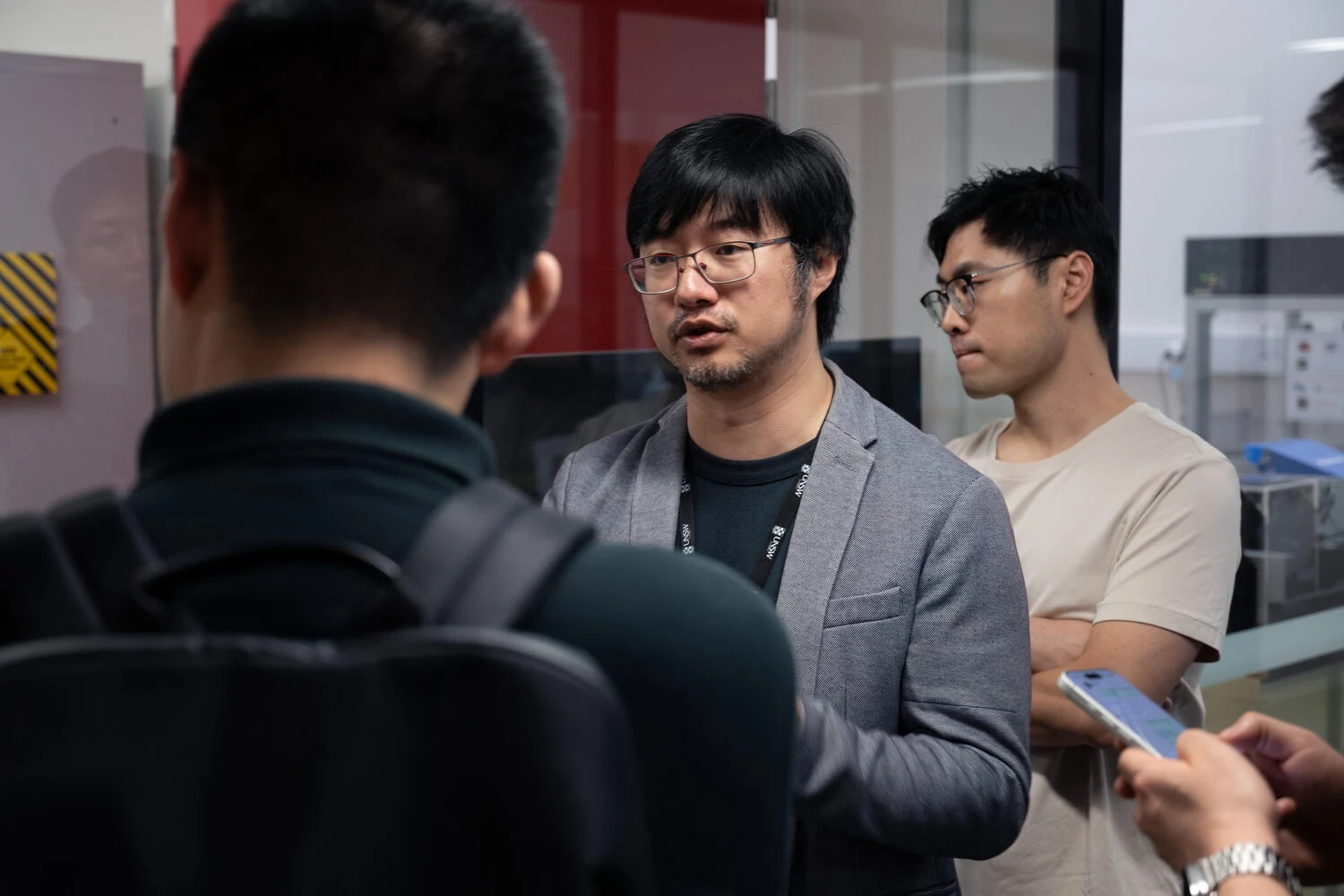
The signing visit combined discussion of potential collaboration with a tour of research laboratories within UNSW’s Faculty of Engineering. It created an opportunity to connect research capabilities with the questions Tecco encounters in designing, delivering and operating intelligent spaces.
The work ahead is to turn that shared agenda into testable questions, suitable data and meaningful evaluation. We will publish further updates as the programme develops, distinguishing research aims from findings supported by evidence.