
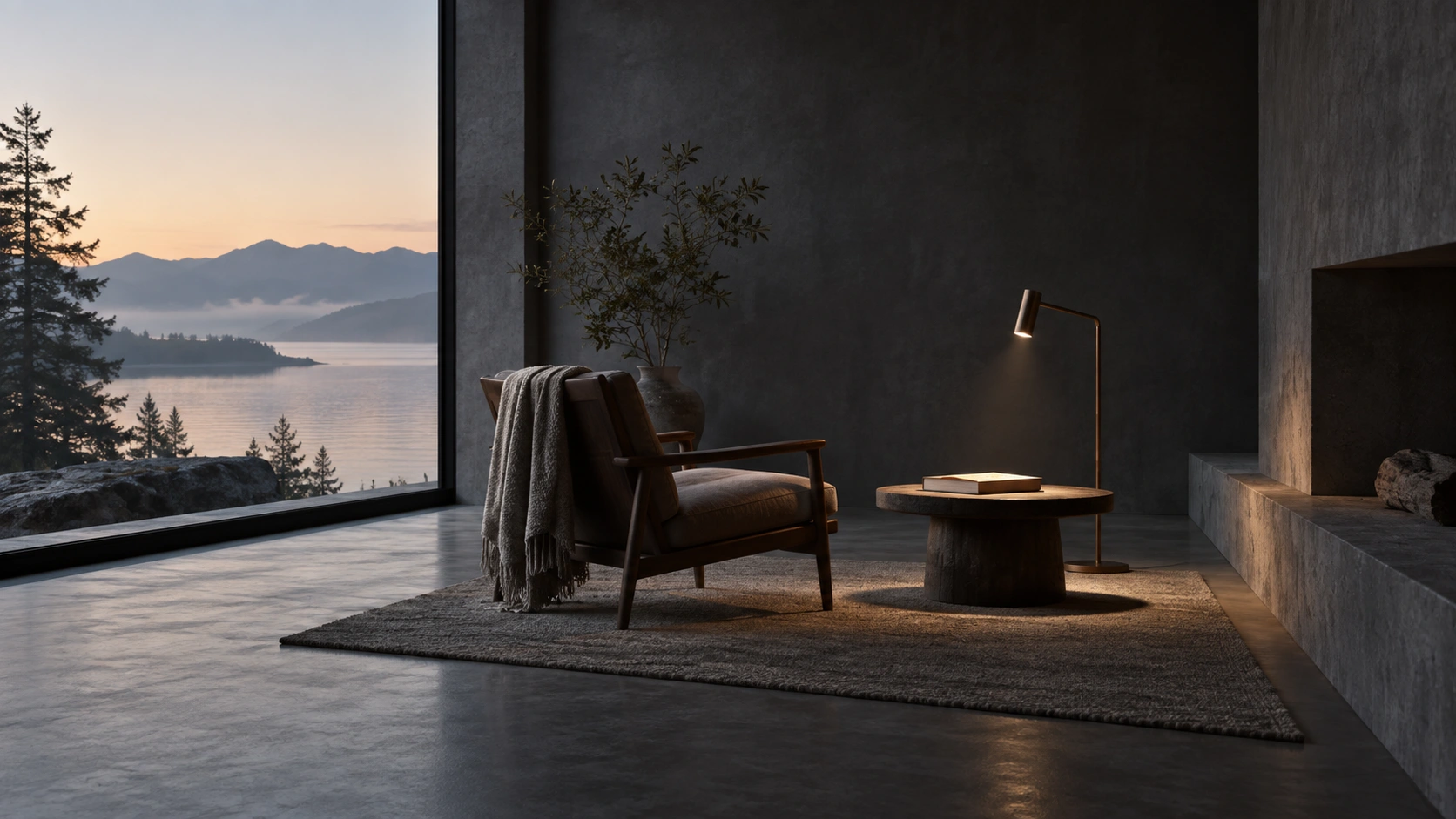
Conceptual living environment at dusk
TECCO RESEARCH / PERSPECTIVES

A critical step
towards spatial
intelligence.

The next interface is an environment
that understands what we are trying to do.

JZ
Joe ZhouTecco · Perspective

We have spent years making devices easier to control. Spatial intelligence asks for something more ambitious: a system that understands people, their activities and the physical context around them.

An English editorial adaptation of Joe’s essay “A critical step towards spatial intelligence”, informed by the Behavior-Centered Home Environment Engine proposal. This perspective describes a product and research direction.

01 / THE SHIFT

Life does not arrive
as a list of commands.

“I want to read for a while.” The intention arrives naturally. The work of deciding which light to adjust, how far to close the blinds and whether the room feels comfortable does not. Today, much of that translation still belongs to the person using the system.

Traditional scenes capture a useful state, but real life keeps moving. The same activity happens at different times, with different people nearby, under different temperatures and levels of daylight. A fixed device snapshot cannot, on its own, express all of that context.

Our opportunity is to carry more of the translation inside the system. The question becomes: what environment would support this behaviour, here, now, for this person?

“Every correction is a person teaching the system what a better environment means.”Joe Zhou · adapted from the original essay
02 / A MISSING LAYER

Make the environment
a first-class idea.

Between human intention and device execution, we propose an environment layer. It describes the qualities we want to create: light, glare, temperature, privacy, safety and atmosphere. Devices become the means by which those qualities are achieved.

This separation matters. A preference for reading light should remain meaningful when a lamp is replaced. A comfortable evening should be understandable without requiring the person to name every circuit. Language interprets the request; spatial context and known capabilities shape an executable plan.

Scenes still have a place. They provide a visible, predictable representation of an intended state—something a person can inspect, adjust and return to. Over time, they can become outcomes of learning as well as tools for deterministic delivery.
RESEARCH ARCHITECTURE / PROPOSED

From behaviour to environment

Select a layer to explore its role.

A target environment,
not a list of commands.
01 / HUMAN INTENT

The request expresses an activity, not a device address. Voice, App and Panel can enter the same interpretation path.

intent: reading
phase: preparing

Language interprets intent. The environment layer resolves goals against context and capability; bounded execution remains a separate responsibility.

INTERACTIVE RESEARCH STUDY

Same intention.
Different environment.

“We’re ready to watch a film.” Change the context to see why a useful scene cannot be a fixed list of device commands.

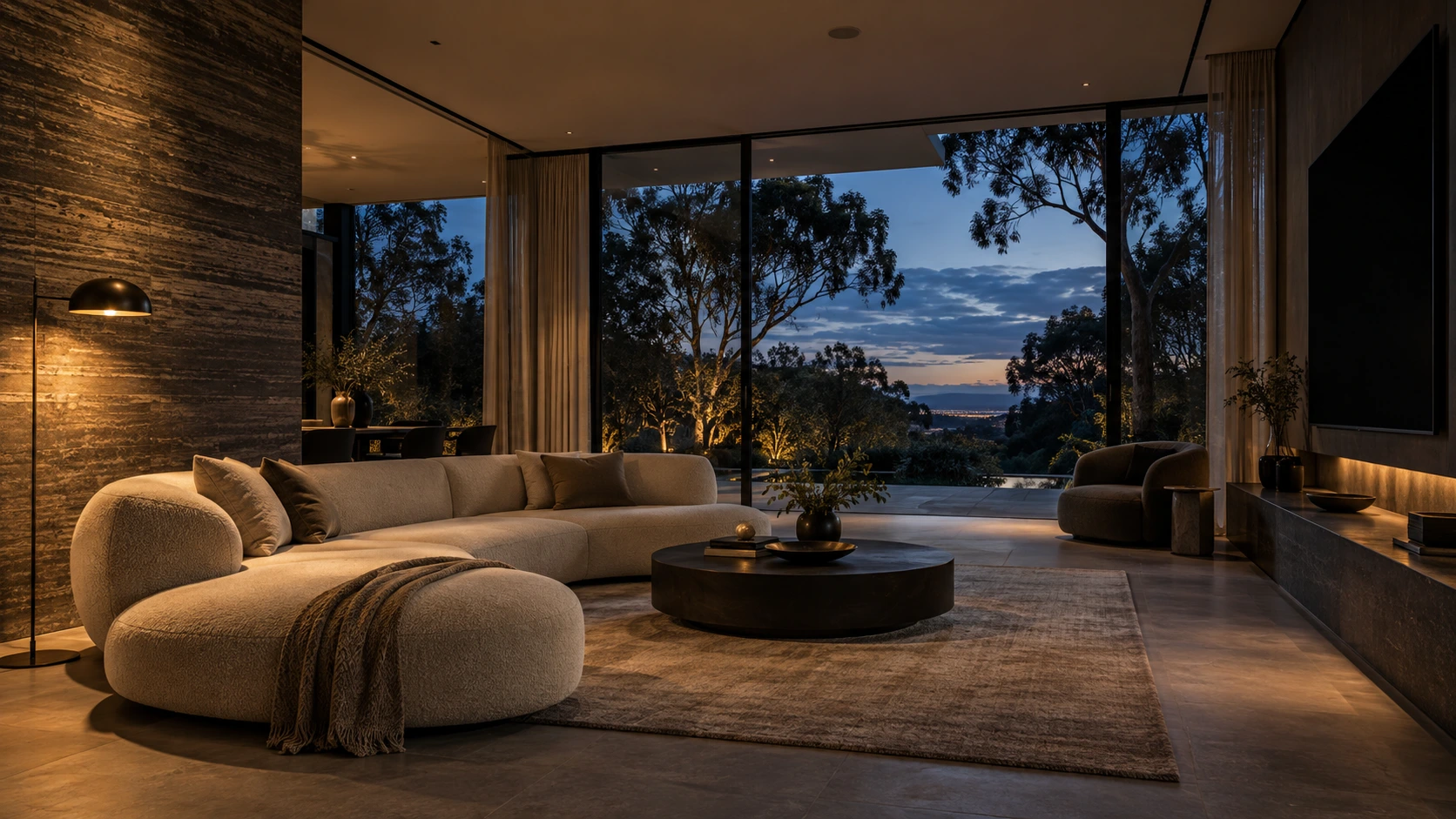
Conceptual contemporary Australian living room, with warm indirect lighting and a garden outlook at dusk
CONCEPTUAL ENVIRONMENTConcept artwork · not a live room view
CHANGE THE CONTEXT
ENVIRONMENT GOAL / LOW GLARE · COMFORT

Manage the daylight.

Daylight can create screen glare. A proposed plan considers shading alongside the current light level.

  • ShadingClose for privacy
  • LightingLow ambient target
  • ClimateCheck current comfort
  • ExecutionReview before applying

Concept artwork remains fixed while the controls change the scenario below. Illustrative rules explain the proposed environment layer. No devices are connected.

03 / THE FIRST STEP

The first breakthrough
may be almost invisible.

The immediate step towards this future is to capture the right evidence. A person saving a state they like gives us something unusually valuable: an environment they have judged for themselves. An execution record tells us when and where it was used. A subsequent adjustment tells us where the system’s assumption diverged from their preference.

These are different observations, and their structure matters more than the novelty of the interface. A snapshot should preserve semantic states—device, capability, target value and unit—alongside its creation context. A raw protocol command records an instruction; a structured capability state preserves something that can later be interpreted.

A useful execution record carries the surrounding context, before-and-after state and relevant corrections. An illustrative observation window might follow execution for thirty seconds, but the window and the meaning of a change require validation. A correction is evidence to interpret, not automatic proof of dissatisfaction.

04 / TWO KINDS OF MEANING

“Cozy” and “that worked”
are different data.

A label attached to a saved snapshot defines a person’s vocabulary. It helps the system learn what that household means by “cozy”, “reading” or “dinner”. An evaluation attached to a particular execution answers another question: did this outcome fit this context?

Define a preference

snapshot_id → label

What does this environment mean to me?

Evaluate an outcome

execution_id → feedback

Did it work in this situation?

Merging the two loses the distinction between a definition and an experience. Light edits carry meaning too: lowering a saved brightness value should leave a correction history, rather than silently replacing the only evidence of what changed.

The interaction should remain light. Saving, naming or adjusting a state should help the person immediately. Feedback should be optional. Inspectable plans, understandable room and device names, and control over what happens are the foundation for trust.

05 / COLD START

A home should have
a useful beginning.

Personalisation cannot begin by asking people to train a blank system. Design supplies rooms, zones, devices and relationships. Delivery supplies tested baseline scenes. Simple preference choices can establish an initial direction. Later corrections can refine that baseline.

Our behaviour-centred proposal treats those stages as one continuous preparation path. The aim is a useful first day and a better-informed first week—not a promise that an unproven learning system will immediately understand every household.

DesignSpatial graph
DeliveryTested baseline
Move-inInitial preferences
LivingContextual corrections
06 / THE LONG VIEW

Build the conditions
for intelligence.

The hard work lies in making meaning travel: from a floor plan to a room, from a room to a capability, from a capability to an experience, and from that experience to evidence we can learn from. It spans design, delivery, product and engineering.

Success in this first phase should be judged by coverage, structural correctness, contextual completeness and the quality of captured corrections. Activity counts alone do not tell us whether the foundation is sound.

The long-term ambition is an environment that becomes easier to live in as it learns what matters. The practical work begins with a smaller commitment: preserve the meaning of what people already tell us, through the states they save and the changes they make.

Explore the research programme
CONTINUE EXPLORINGHow we turn questions into evidence